The Material Science Guide
You spend hours choosing healthy food for your family. But have you ever thought about the surface where you wash that food?
In the Bangladeshi market, you will find kitchen sinks ranging from 2,000 BDT to 50,000 BDT. To the naked eye, they all look like shiny silver steel. But within 6 months, many of the cheaper ones start to show reddish-brown rust spots or turn black.
This isn’t just an aesthetic problem; it’s a hygiene issue.
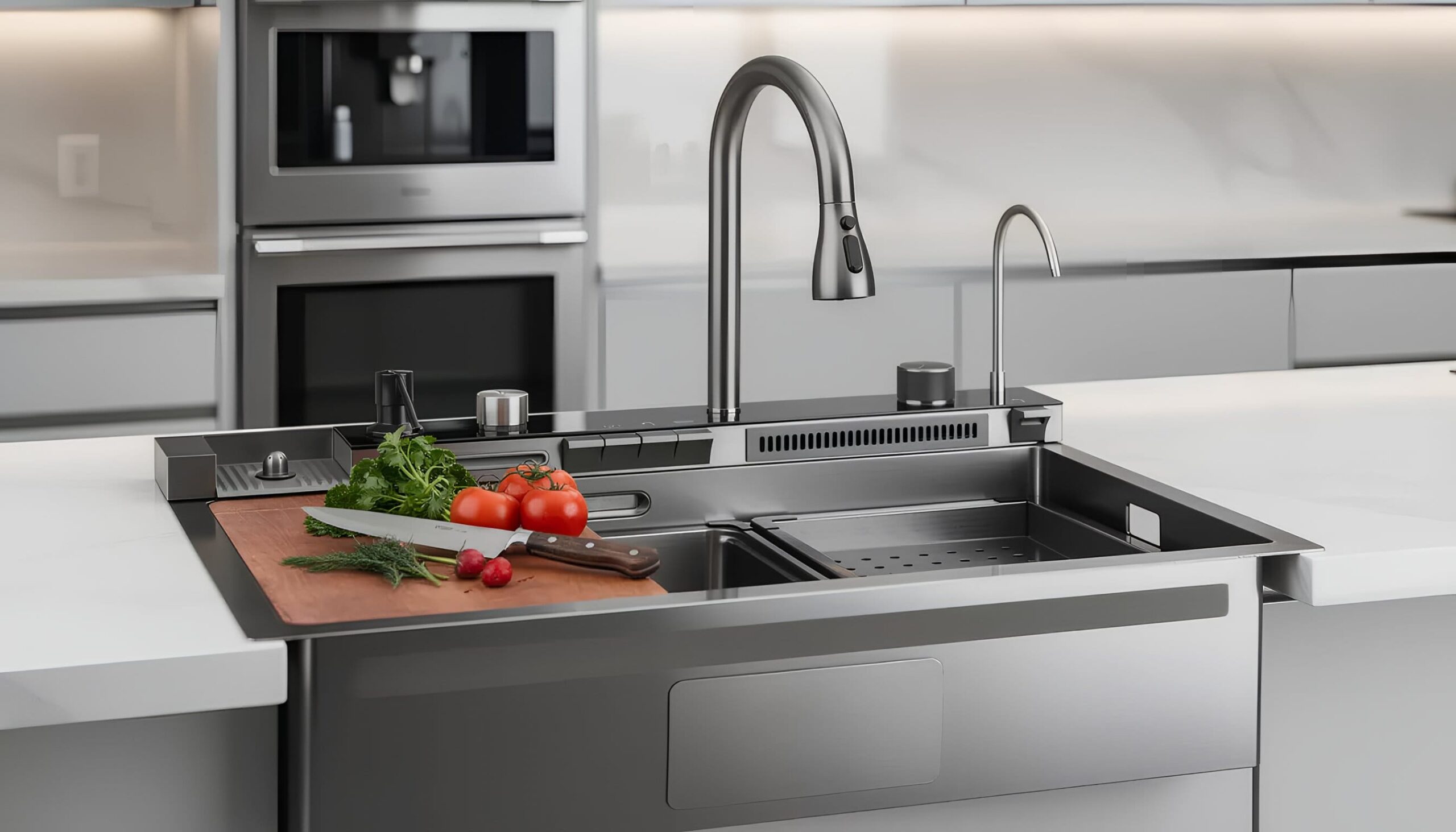
At Harrington, we strictly use SUS 304 (Grade 304) Stainless Steel for our premium kitchen sinks. But what does that mean, and why should you care?
1. The “Rust” Reality in Bangladesh
Bangladesh is a humid country with heavy rainfall. In areas like Chittagong or Cox’s Bazar, the air is salty. In Dhaka, the groundwater often has high iron content.
- The Problem: The local market is flooded with “Grade 201” or “Grade 202” steel sinks. These alloys contain very little Nickel and high Manganese. When exposed to our humid air and water, they oxidize (rust) very quickly.
- The Solution (Grade 304): Harrington’s Grade 304 steel contains 18% Chromium and 8% Nickel. This specific chemical combination creates an invisible “Passive Layer” on the surface that acts as a shield. Even in humid weather or salty air, Grade 304 simply does not rust.
2. “Food Grade” Safety: The Acid Test
Bangladeshi cooking loves acidity. We use lemons, tamarind (tetul), tomatoes, and vinegar daily.
- The Danger: When acidic foods touch low-quality steel (Grade 201), a chemical reaction can occur, leaching metallic tastes or harmful substances into your food.
- The Safety: Grade 304 is internationally certified as “Food Grade.” It is chemically inert. You can squeeze lemons, wash raw meat, or leave marinating fish in a Harrington sink without any fear of chemical contamination. It is the same steel used in surgical instruments and 5-star restaurant kitchens.
3. The Durability Difference
A kitchen sink takes a beating. Heavy pots, sharp knives, and hot water are daily occurrences.
- Hardness: Grade 304 is not just rust-proof; it is physically tougher. It resists dents better than cheaper alloys.
- Self-Healing: If you accidentally scratch a Harrington sink, the chromium in the steel reacts with oxygen to “heal” the scratch, preventing rust from forming in the cut.
4. How to Spot the Fake? (The Magnet Test)
How do you know if a shop is selling you real 304 steel or fake cheap steel?
- The Tip: Take a magnet with you.
- The Test: Place the magnet on the sink.
- If it sticks strongly, it is likely cheap Grade 201 or 430 steel (Avoid it!).
- If the magnet does not stick (or has a very weak pull), it is likely genuine Grade 304.
- Note: Mechanical pressing can sometimes introduce slight magnetism in corners, but the flat surfaces of a Harrington sink will essentially be non-magnetic.
Final Verdict: Don’t Compromise on Health
A kitchen sink is usually cemented into your countertop. Replacing it is a nightmare—you have to break your granite or marble slab.
Don’t save a few thousand Taka now only to face rust and renovation costs next year. Choose Harrington Grade 304—safe, durable, and built for the Bangladeshi kitchen.