

Nothing touches
the floor.
What you gain by
letting go of the floor.
The floor stays whole
There is no pedestal meeting the tiles, so there is no rim of grout to scrub around and no shadow behind the base. The mop passes under the bowl in one stroke and the floor reads as a single surface.
- No floor contact
- Mops underneath in one pass
- No base seal to discolour
- Tile line runs unbroken
The room reads larger
Seeing the floor continue beneath the fixture is what makes a small bathroom feel bigger — more than any colour or mirror will. The shallowest body here projects just 350 mm from the wall.
- 350–370 mm projection
- 490–540 mm wide
- Visually continuous floor
- Suits compact bathrooms
The cistern disappears
The tank sits inside the wall on the carrier frame, so the only things in the room are the ceramic body and a flush plate. Nothing to dust along the top, nothing to knock.
- Concealed in-wall cistern
- Flush plate only
- Quieter fill behind plaster
- No exposed tank to clean
You choose the height
A floor-standing commode is whatever height it was cast at. A wall-hung one is set when the frame is fixed, so the seat can be put where it suits the person who uses it.
- Seat height set on site
- Higher for easier standing
- Lower for children
- Decided once, at install
The floor you keep,
and the one you lose.
A floor-standing commode ends in a footprint: grout line to seal, an edge that discolours and a shadow behind the base you cannot reach. A wall-hung body ends in mid-air. The difference is one continuous surface instead of two, and it is why a small bathroom looks larger.
The question everyone
asks first.
“Will it come off the wall?” No — because the wall is not what is holding it. Here is what is.
The frame, not the tiles
A wall-hung commode is not screwed to your wall finish. A steel carrier frame is fixed to the floor slab and the structural wall behind, and the ceramic bolts to that frame. The plaster and tile in front carry nothing at all.
- Rated to 400 kg
- Fixed to Floor slab + structural wall
- Carries Frame, not tile
- Cistern Inside the frame
400 kg, tested
Every model in this collection is rated to 400 kg. For scale, that is several adults at once — the figure exists so the fixture is never the limiting part, not because anyone expects to approach it.
- Capacity 400 kg
- Applies to All 9 models
- Ceramic Vitreous, fired 1280°
- Seat Soft-closing UF
A wall that can take it
A solid brick or concrete wall is ideal. A stud or partition wall is still fine, but the frame must be fixed back to the structure behind it rather than to the board. This is worth confirming before you order, not after.
- Best Brick or concrete
- Also fine Stud, braced to structure
- Not enough Board alone
- Check At survey
Access without breaking tile
The flush plate lifts out, and the valve and inlet are reached through that opening. Nothing routine requires opening the wall.
- Service via Flush plate aperture
- Wall opening Not required
- Flush Dual, on the plate
- Waste Through the wall
The same ceramic
on every model.
Fired at 1280°
Vitrified body
400 kg capacity
Every model
360° inner glaze
Through the trapway
Micro-Clean Jet Glaze
Low-adhesion surface
Rimless flush
On 8 of 9 models
Curved seat
Shaped for comfort
Soft-closing UF seat
Included on all 9
Bacterial protection
Across the glaze
Environment friendly
Declared on all 9
Three finishes
White, matte black, matte white
490–540 mm wide
Body width
350–370 mm deep
Projection from wall
Nine bodies,
one way of hanging.
Sorted by model number. Projection is the figure to watch in a small bathroom — it is how far the body stands out from the finished wall.
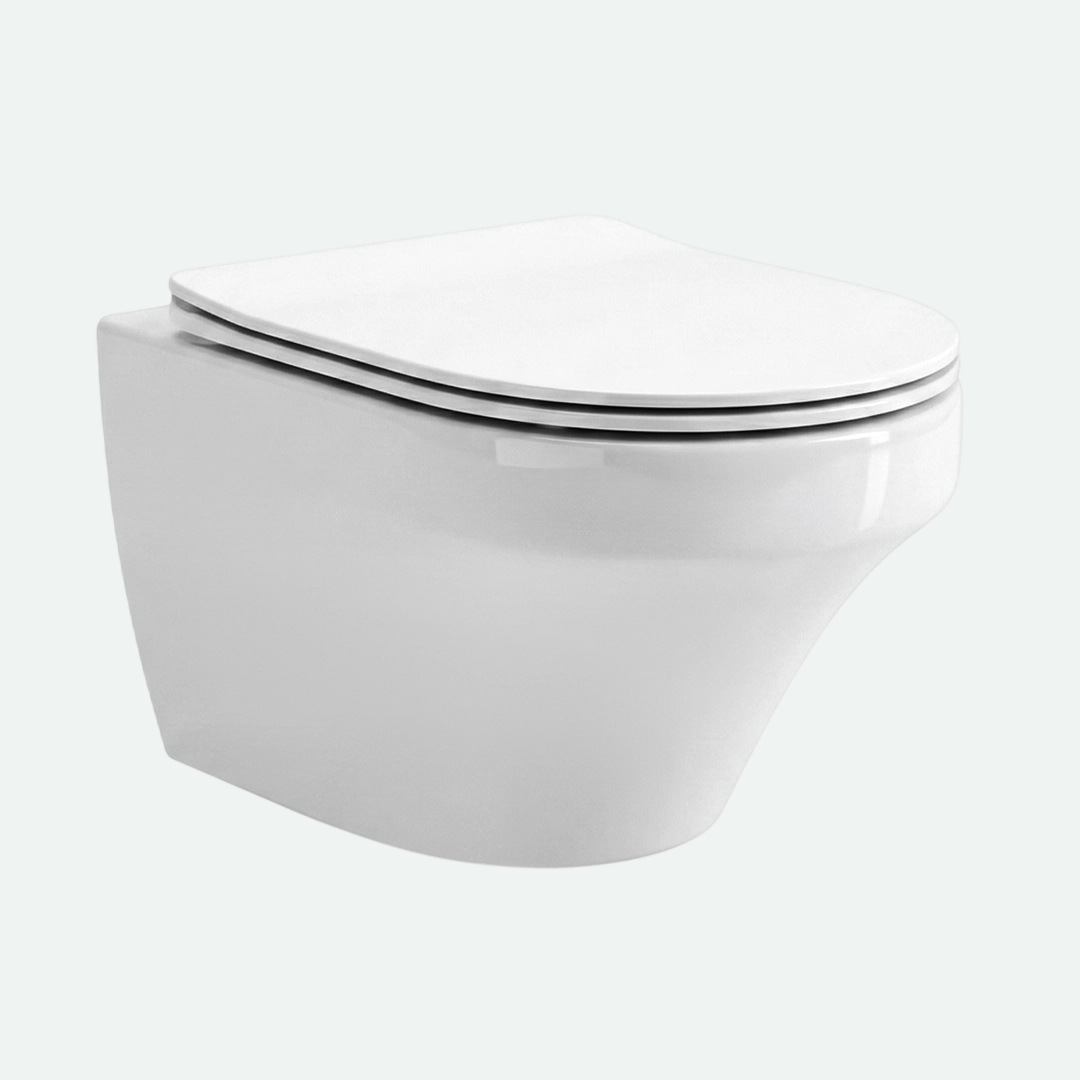
Rimless Tornado flush
- W×D×H 530 × 360 × 340
- Projection 360 mm
- Capacity 400 kg
- Seat UF soft-close
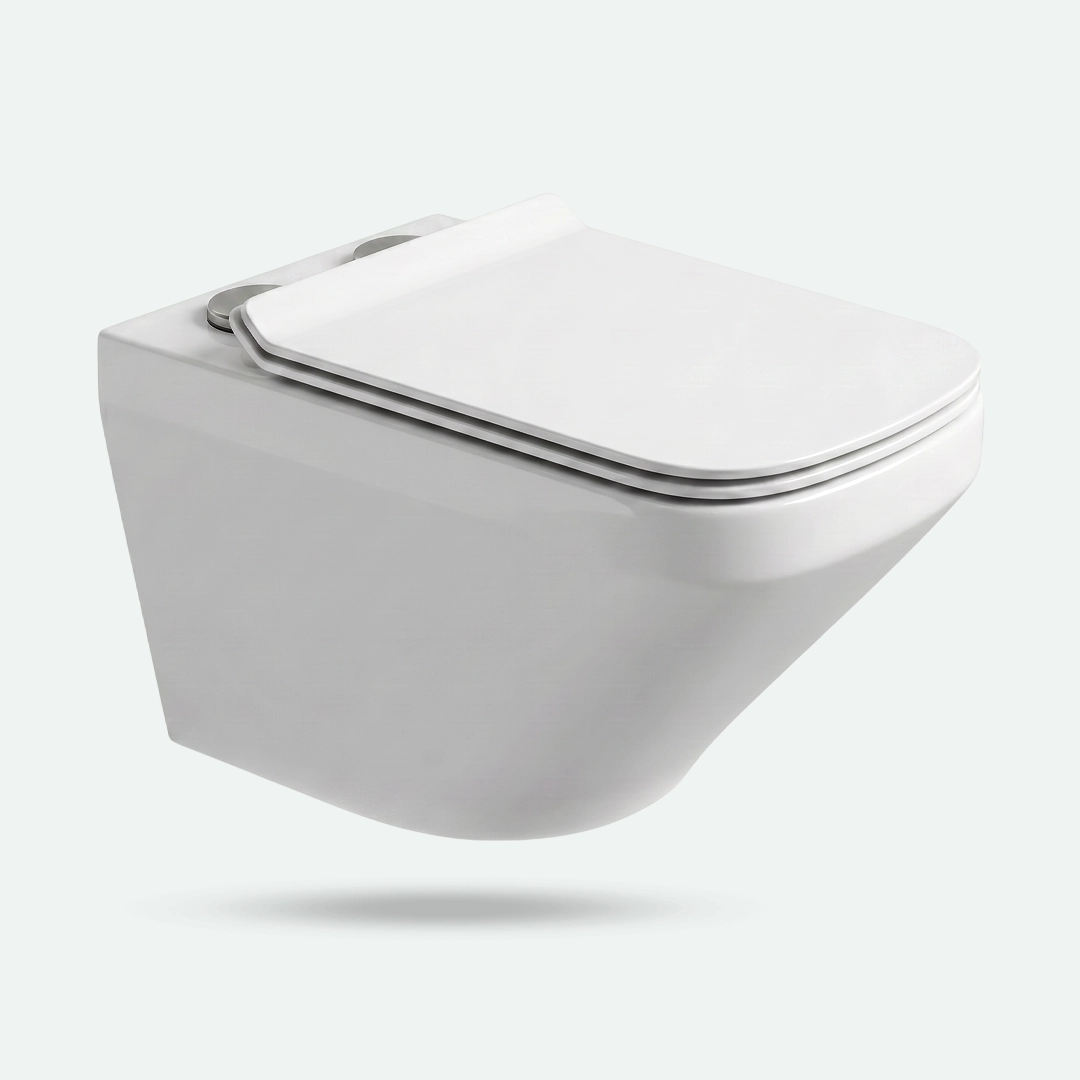
Rimless Tornado flush
- W×D×H 540 × 370 × 360
- Projection 370 mm
- Capacity 400 kg
- Seat UF soft-close
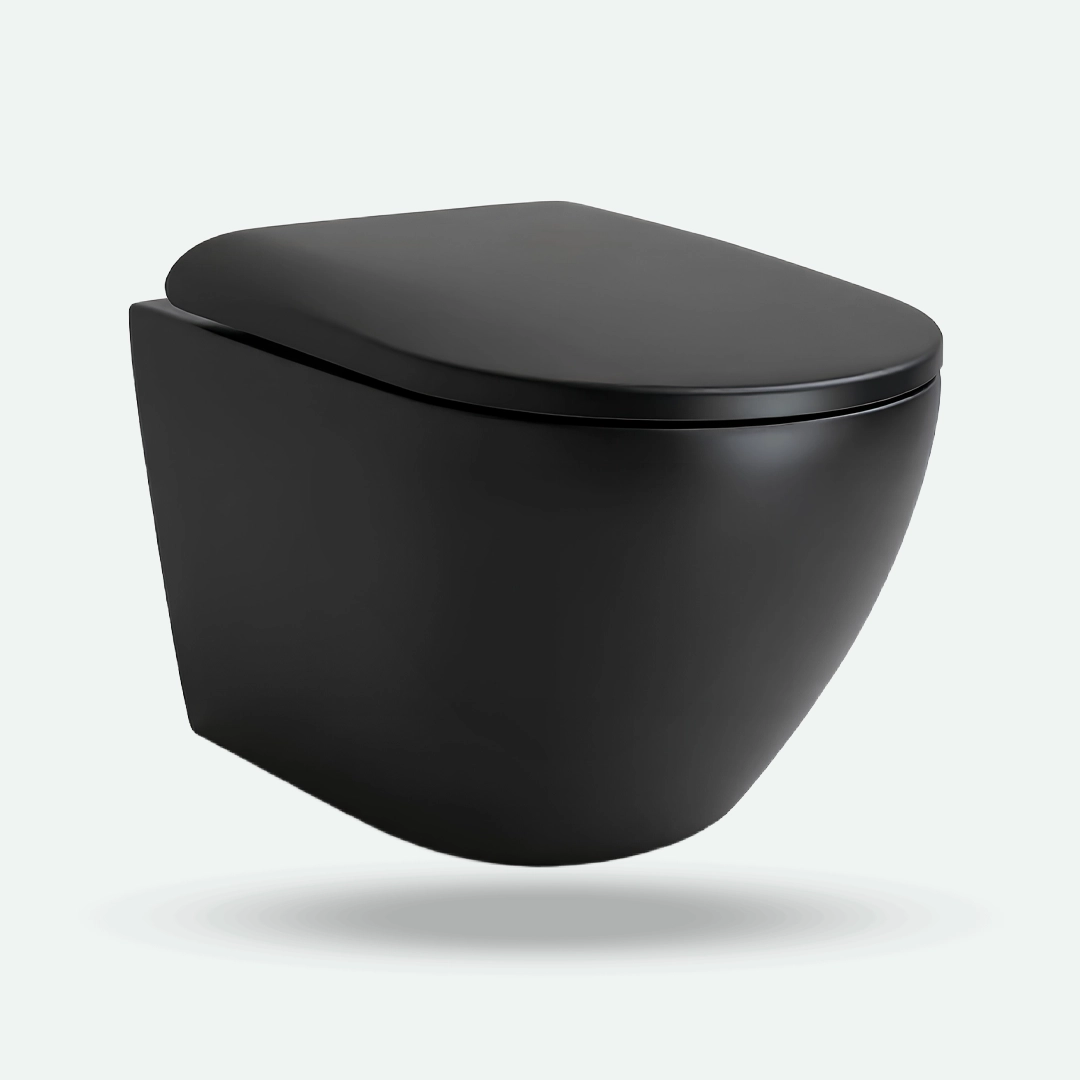
Rimless Tornado flush
- W×D×H 490 × 370 × 370
- Projection 370 mm
- Capacity 400 kg
- Seat UF soft-close
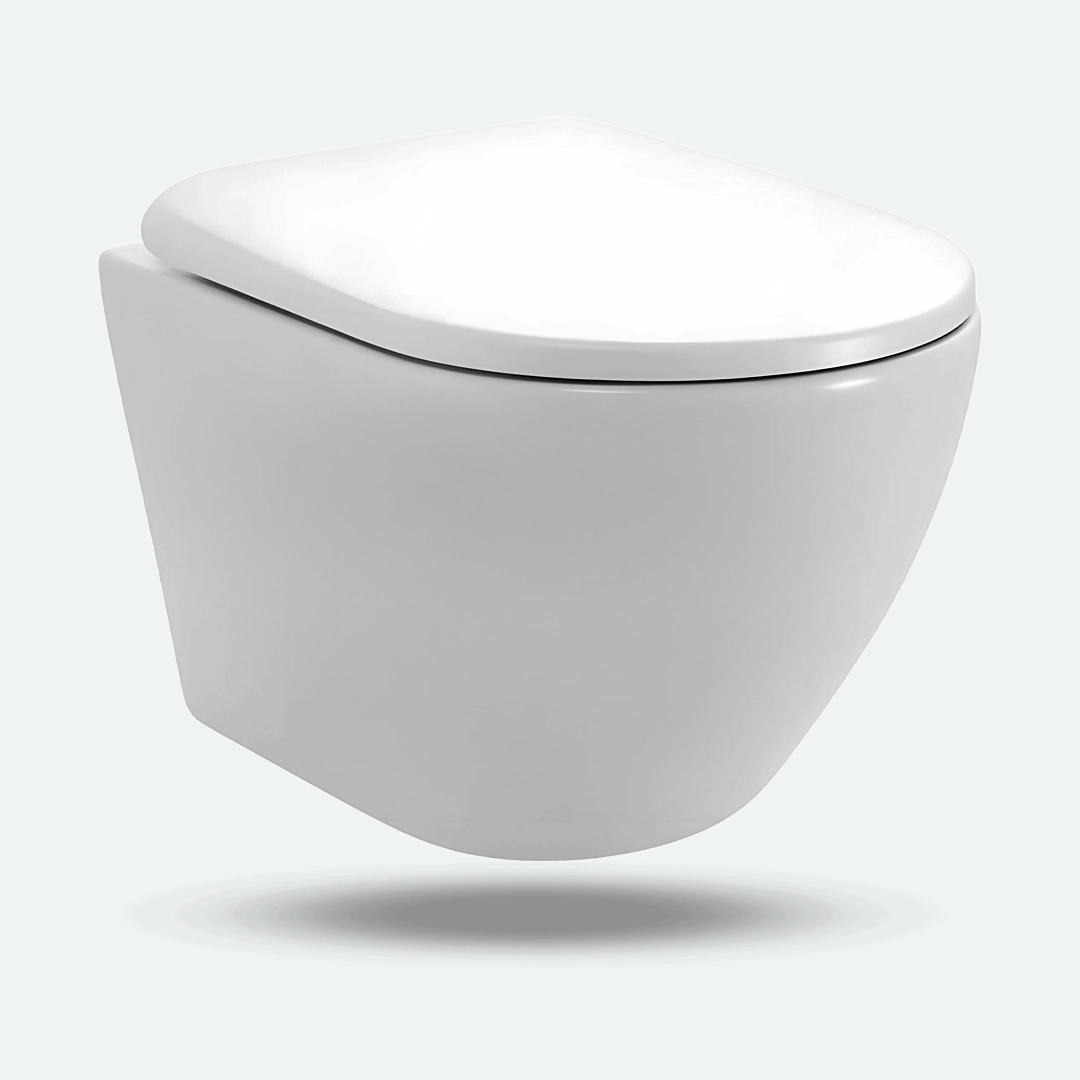
Rimless Tornado flush
- W×D×H 490 × 370 × 370
- Projection 370 mm
- Capacity 400 kg
- Seat UF soft-close
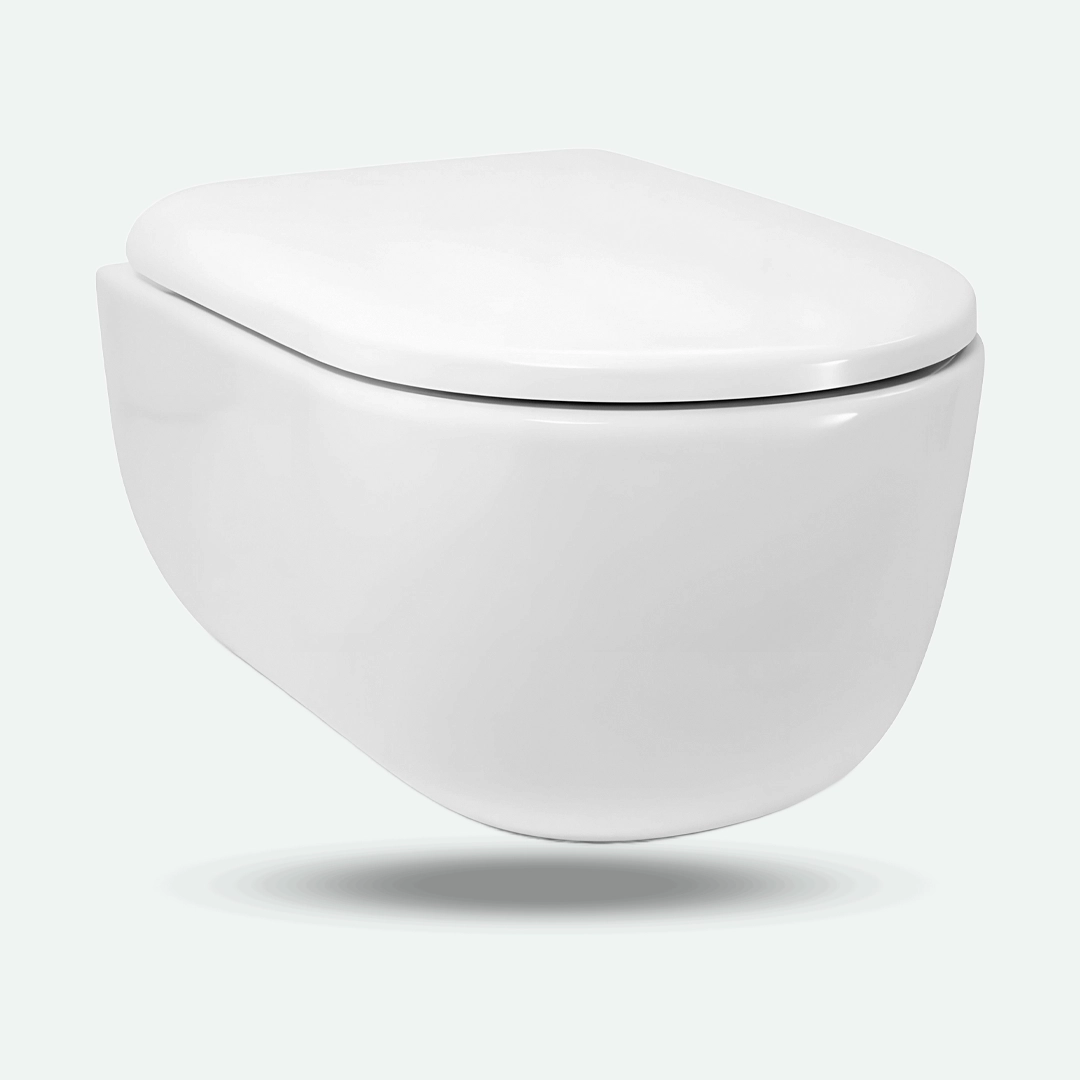
Rimless Tornado flush
- W×D×H 490 × 355 × 320
- Projection 355 mm
- Capacity 400 kg
- Seat UF soft-close
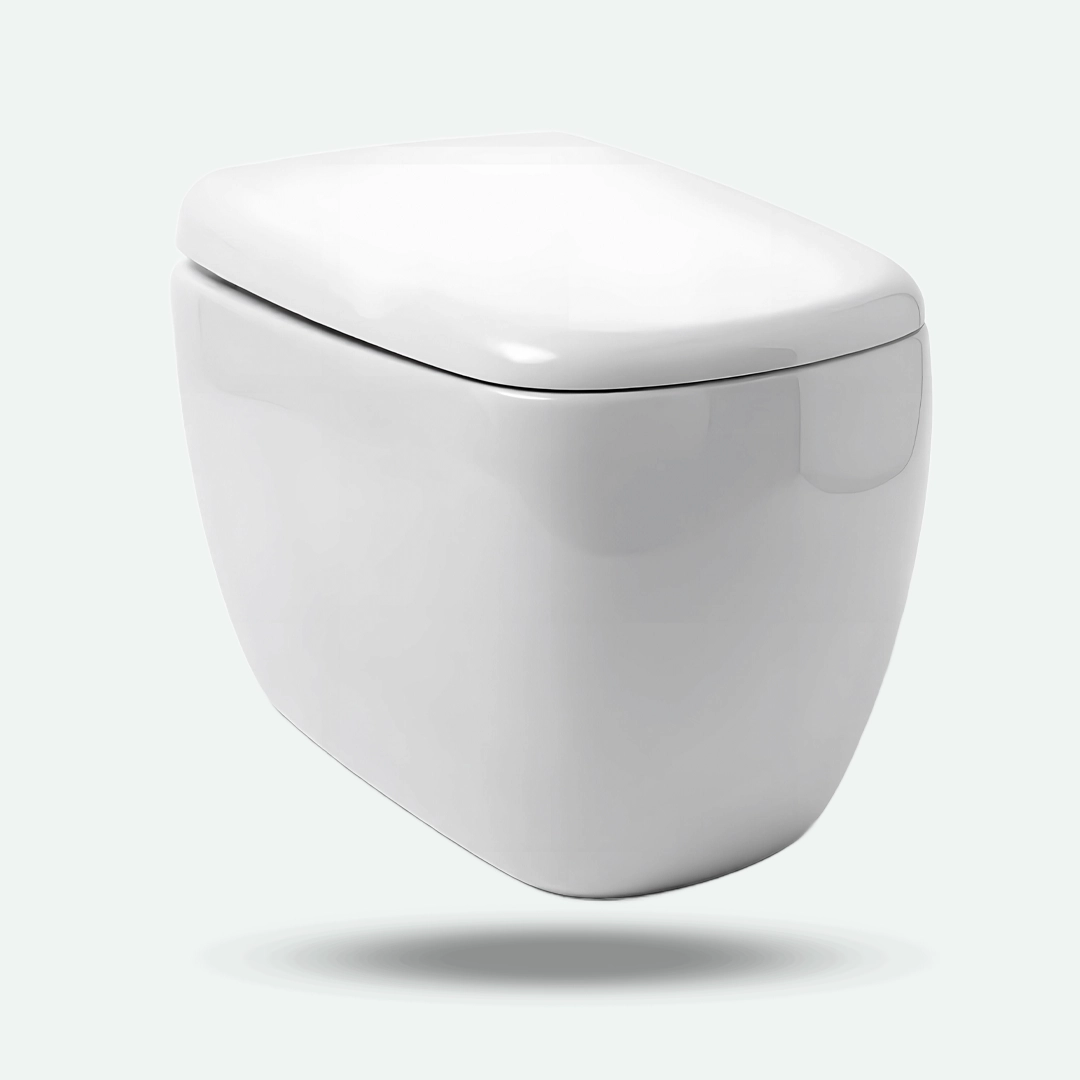
Rimless Tornado flush
- W×D×H 535 × 370 × 370
- Projection 370 mm
- Capacity 400 kg
- Seat UF soft-close
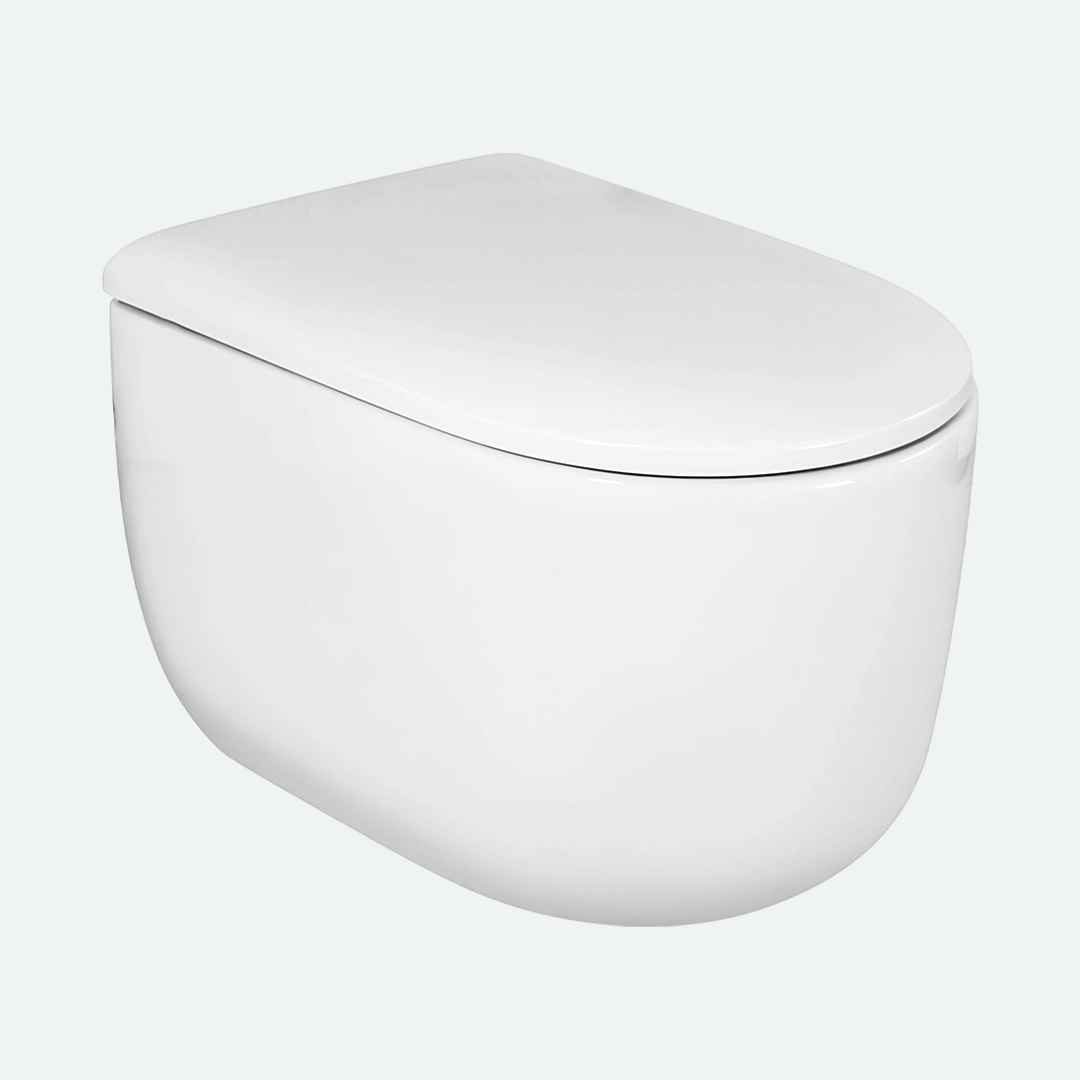
Rimless Tornado flush
- W×D×H 515 × 370 × 300
- Projection 370 mm
- Capacity 400 kg
- Seat UF soft-close
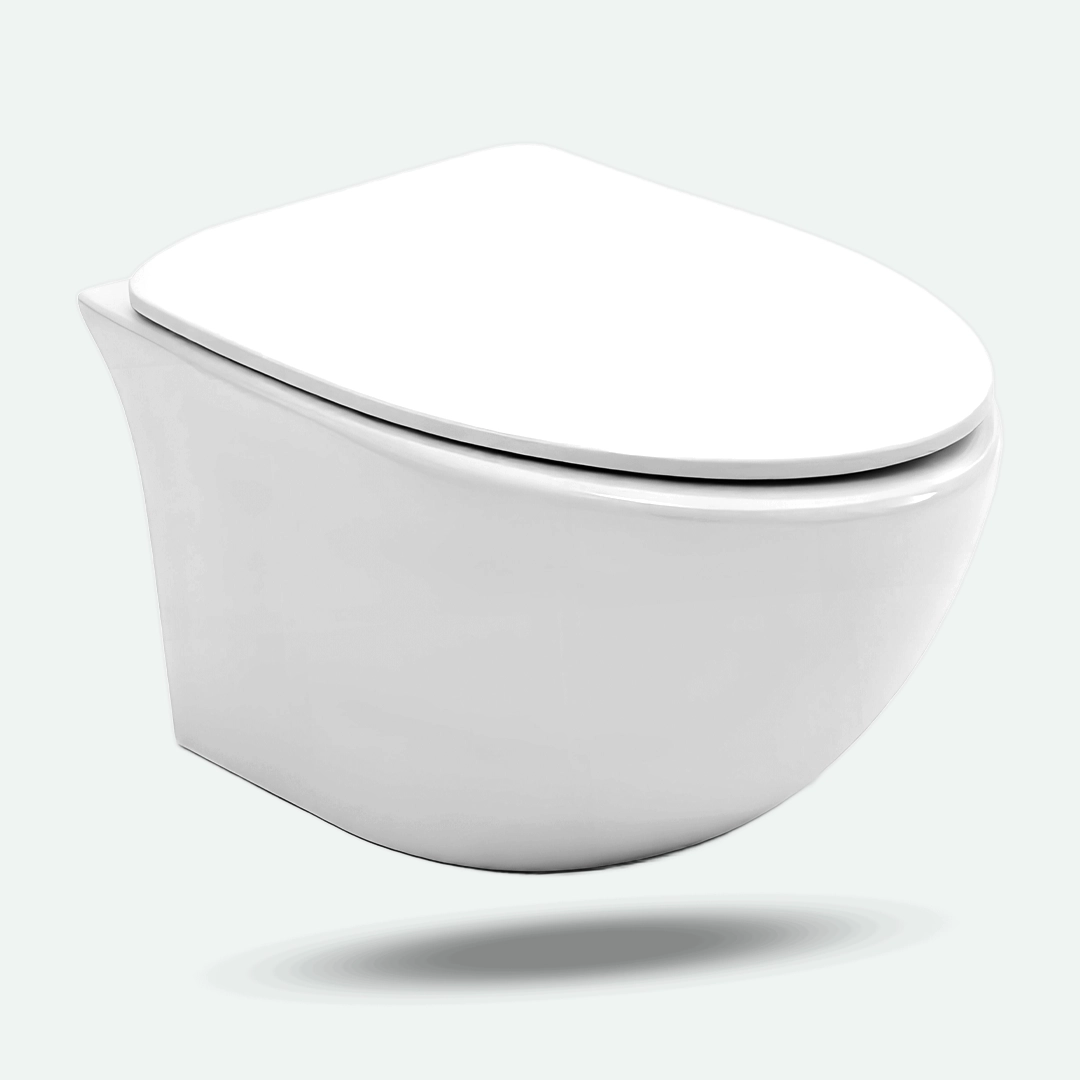
Tornado flush
- W×D×H 520 × 370 × 360
- Projection 370 mm
- Capacity 400 kg
- Seat UF soft-close
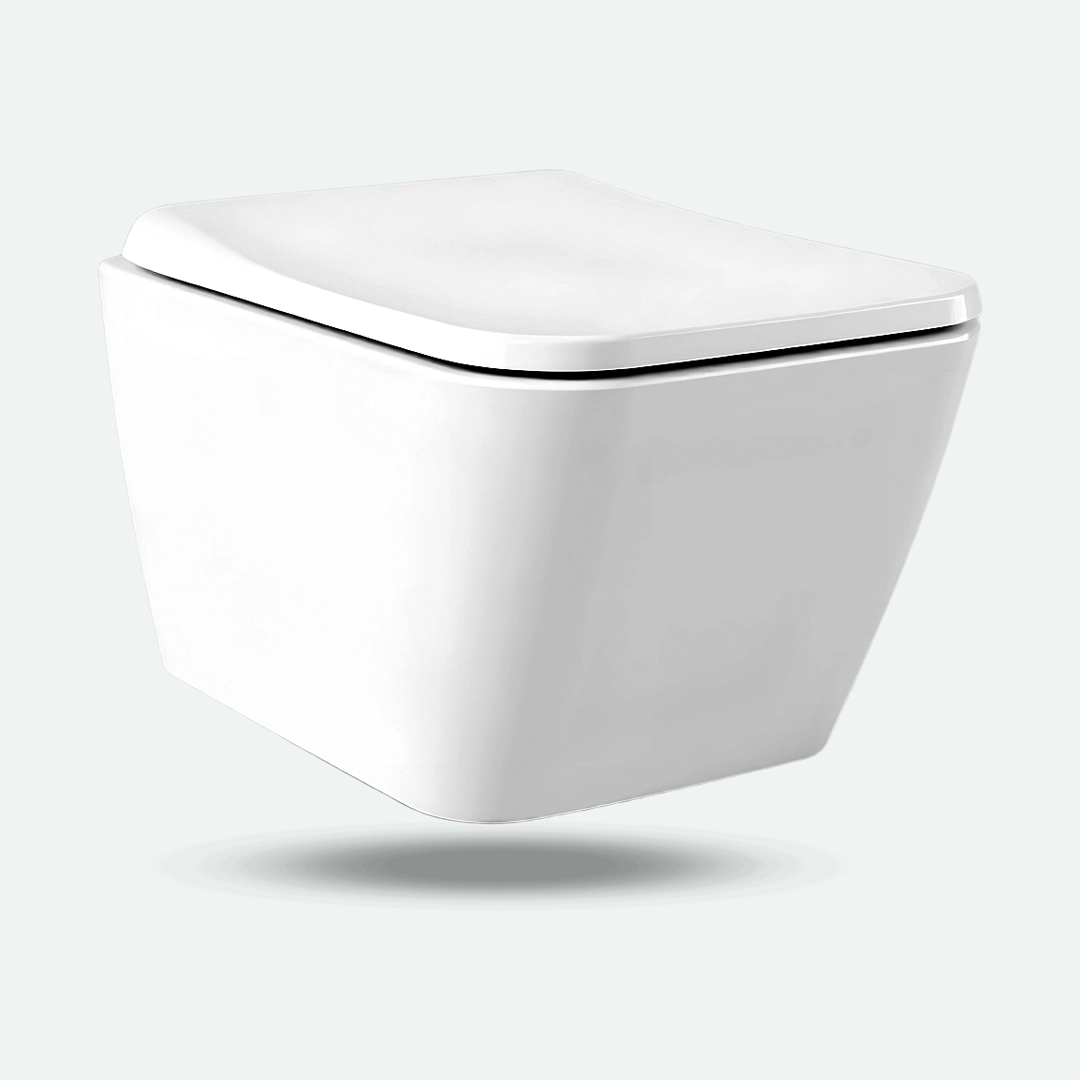
Rimless Wash Down flush
- W×D×H 520 × 350 × 345
- Projection 350 mm
- Capacity 400 kg
- Seat UF soft-close
Three of the Smart Collection hang on the wall too.
If you want a wall-hung body that also warms, washes and dries, models 013001, 013002 and 013003 mount the same way on the same kind of frame.
The numbers that
do not change.
| Specification | Wall Hung Collection |
|---|---|
| Type | Wall hung commode, concealed cistern |
| Weight capacity | 400 kg |
| Body | Vitreous porcelain |
| Firing temperature | 1280° |
| Glaze | Micro-Clean Jet Glaze · 360° inner glaze |
| Flush | Rimless Tornado (7) · Tornado (1) · Rimless Wash Down (1) |
| Finishes | White (7) · Matte Black (1) · Matte White (1) |
| Seat | UF seat cover, soft-closing, curved for comfort |
| Width | 490–540 mm |
| Projection | 350–370 mm |
| Body height | 300–370 mm |
| Seat height | Set by the carrier frame at installation |
| Cistern | Concealed, in-wall, within the carrier frame |
| Waste | Through the wall |
| Protection | Bacterial protection across the glaze |
| Environment | Environment friendly (all 9 models) |
Questions we get
every week.
Will a wall-hung commode really hold my weight?
Yes. Every model here is rated to 400 kg, and the load does not go into your tiles or plaster at all — it goes into a steel carrier frame bolted to the floor slab and the structural wall behind. The wall finish in front of the frame carries nothing.
Can it go on any wall?
A solid brick or concrete wall is ideal. A stud or partition wall works too, provided the carrier frame is braced back to the structure rather than fixed to the board. Confirm this at survey before ordering — it is the one thing that decides whether the installation is straightforward.
Where does the cistern go?
Inside the wall, within the carrier frame. All you see in the room is the ceramic body and the flush plate. It also runs quieter, because the fill happens behind plaster rather than in an open tank.
How do I service it if something goes wrong?
Through the flush plate. The plate lifts out and the valve and inlet are reached through that aperture. Nothing routine means opening up tiled wall.
What height will the seat be?
Whatever you set it to. That is the advantage — the height is fixed when the frame is installed rather than cast into the ceramic. A little higher is easier to stand from; a little lower suits children. Decide it once, on site.
What is projection, and why does it matter?
Projection is how far the body stands out from the finished wall. Across this collection it runs 350 to 370 mm. In a narrow bathroom it is the measurement that decides whether the door still opens comfortably, so it matters more than width.
Bring a photo
of the wall.
Wall-hung is the one commode type where the room decides as much as the model does. Send a photo of the wall and the existing waste position, or book a survey, and we will confirm the frame and the projection before anything is ordered.
36 Bir Uttam CR Dutta Road
Hatirpool, Dhaka 1205, Bangladesh
Carrier frame drawings and rough-in dimensions on request.